
Attention, understood from the inside out.
Focused attention has a biochemistry. Most assessments skip it.
ADHD often presents as “easily distracted”. It can look like a mind that won’t settle or won’t start, difficulty beginning tasks and seeing them through, restlessness, impulsivity, forgetfulness and shaky working memory, losing track of time, and emotions that land fast and hard, and it’s not about will power.
These patterns are real and genuinely wearing, and they’re shaped by several things at once: how the brain is wired, the strategies and support around you, and the biochemistry running underneath. Good management usually works on more than one of those at the same time.
Psychological and behavioural approaches like coaching, routines, therapy and, where appropriate, medication, can do important work on the wiring and the day-to-day, and they matter. What’s often left out is the biochemistry: the nutrients, minerals and methylation the brain depends on to build and regulate the very chemicals attention runs on, dopamine and noradrenaline.
Low iron, an imbalanced zinc-to-copper ratio, methylation imbalances and unstable blood sugar can all quietly hold focus back, and food sensitivities can make people feel uncomfortable and unsettled or worse. Every one of them is measurable and modifiable.
This package is the nutritional and biochemical layer of your ADHD picture. It measures that machinery directly, alongside a genetic and medication-response profile, and works alongside your psychologist, GP or prescriber rather than in place of them, and the plan is built on what’s actually happening in your biology.
The label stays the same; the lived experience changes.
There are of course stereotypes with ADHD, boys versus girls, adults versus children. Sometimes it’s missed in childhood, and sometimes it seems to appear or worsen with hormonal changes and appear worse in adulthood. In children it can look like restlessness, daydreaming, anxiety, perfectionism, quiet overwhelm and be masked by years of a child simply “trying harder.”
It can look like low mood, or mood changes, in the teenage years, and inner restlessness or agitation, disorganisation and emotional intensity; and in adults it commonly looks like difficulty with time, planning, follow-through and regulating emotion, rather than someone bouncing off the walls.
Diagnosed ADHD is most often treated with medication, and for many people that helps. But medication manages symptoms while it’s in the system, it doesn’t ask what else might be driving them, and it isn’t the only lever. And as a medicated child’s brain changes with development, if early deficiencies aren’t addressed or chemical imbalances arise, so can other complications like mental illness.
Understanding your particular presentation, and supporting the nutritional and biochemical factors underneath it, gives you more ways to manage symptoms: alongside medication, or as part of a broader plan if medication alone isn’t the whole answer for you.
Attention is not one chemical. It’s a supply chain.
Dopamine and noradrenaline let you start things, stay with them and filter out noise. To make them, the body converts amino acids step by step, and each step requires a cofactor. Iron is the rate-limiting one: it drives the enzyme that makes dopamine, which is why low ferritin has been repeatedly associated with more pronounced ADHD symptoms, even when someone isn’t anaemic and a standard iron result looks “fine.” Vitamin B6, zinc, magnesium, folate and B12 all sit in that same production line. If you are low in one, a pathway slows; if you have too much of one, a balance tips.
Balance matters as much as supply. Zinc is needed to make and regulate dopamine and is often found low; when copper runs high relative to zinc, that ratio has been linked with hyperactivity and behavioural symptoms. Methylation, the same cycle behind mood and energy, governs how neurotransmitters are built and broken down, and blood-sugar swings and low essential fats can affect attention and focus too. The brain is fatty and also sensitive to sugar imbalances. None of this is the whole story of ADHD, but all of it is modifiable, and most of it never gets mentioned or measured.
Biochemistry, genetics and medication response are three different questions. A gene variant tells you about predisposition. Biochemistry tells you what’s happening right now. And pharmacogenomics tells you how you’re likely to process the medications themselves. They answer different questions, and the more information you have, the better you can target your care plan.
So I measure the functional picture first: ferritin, zinc and copper, homocysteine, your B-vitamin status and neurotransmitter patterns, because that’s what’s actually driving how you feel today. The DNA profile then explains what we’ve found and flags vulnerabilities and strengths. The pharmacogenomic report is information you and your prescriber can use: it helps make sense of why the same stimulant dose can help one person and cause side effects in another. I don’t manage medication, but you can take this report to your doctor or psychiatrist who does; the right information makes that conversation more relevant.
What’s included.
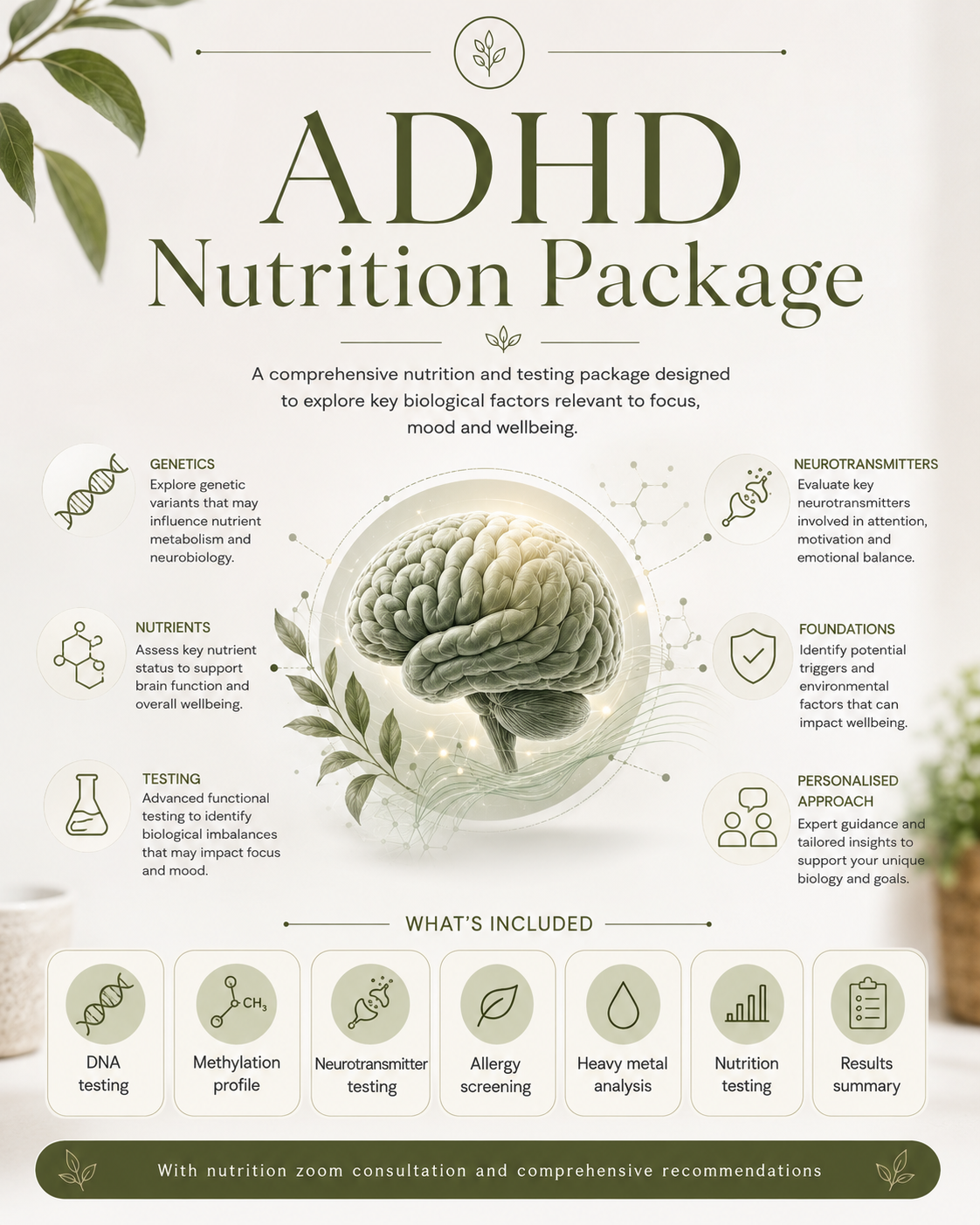
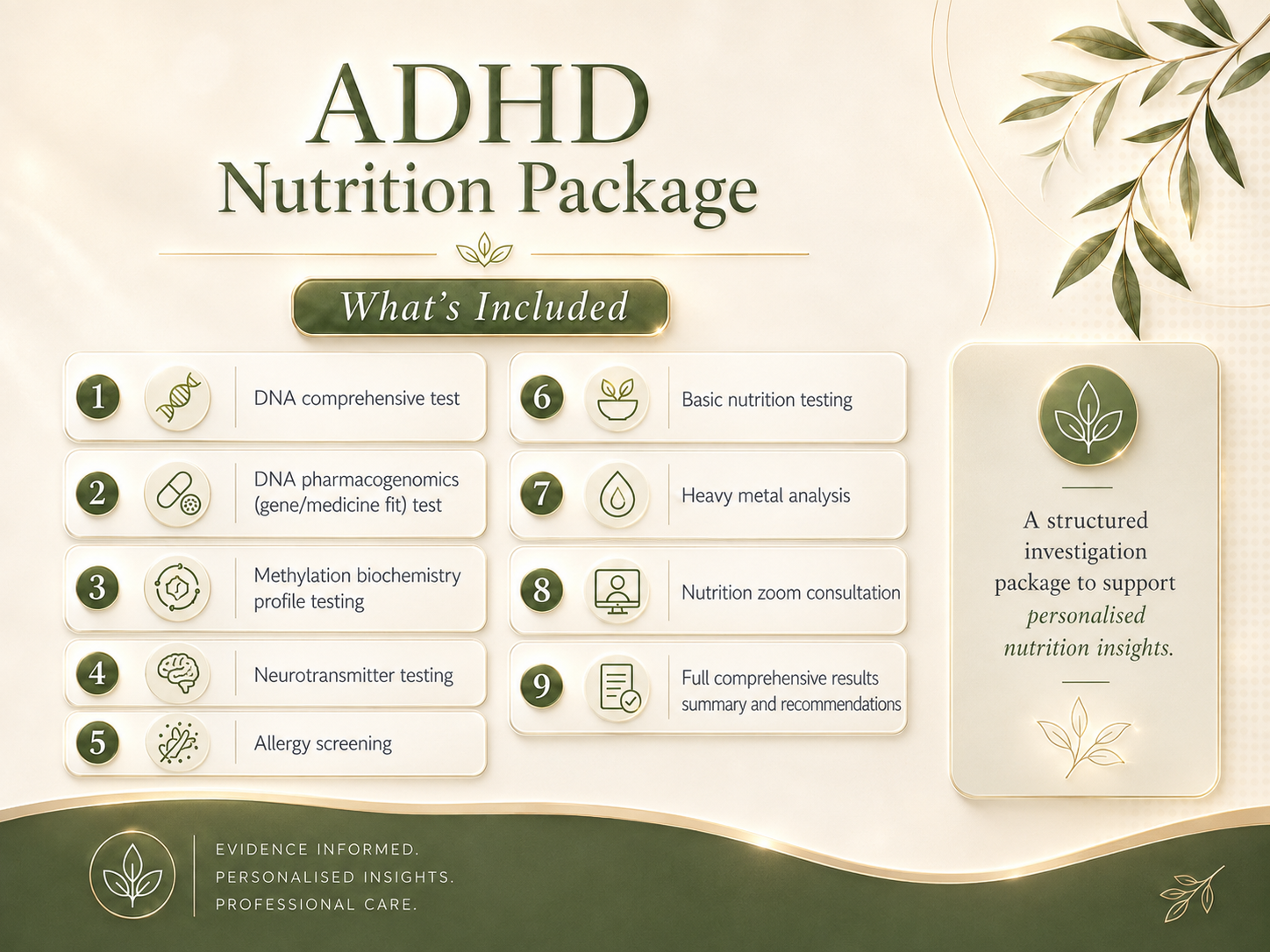
- ✦Comprehensive DNA screening plus a pharmacogenomic (medication-response) profile
- ✦Neurotransmitter assessment
- ✦Methylation and mineral biochemistry
- ✦Iron studies (including ferritin), B-vitamin profile and lipids
- ✦Food-sensitivity screening
- ✦Pre-consult screening, questionnaire and onboarding
- ✦Two nutrition consultations via Zoom: initial and results review
- ✦Personal results summary and prioritised recommendations report
The Process — four steps.
Onboarding & screening
Pre-consult screening, questionnaires and onboarding completed before we meet, so the first consultation is about you, not admin.
Testing
Your neurotransmitter, methylation, minerals, vitamins and food-sensitivity testing, plus your DNA and pharmacogenomic profile.
Results consultation
Your biochemistry and genetics reviewed together and in the context of your life, symptoms and current care.
Personal report
A written results summary with clear, prioritised diet, nutrient and lifestyle recommendations, and, where relevant, information to take back to your prescriber.
Who this is for.
- ✓Adults with an ADHD diagnosis wanting to address the modifiable nutritional and biochemical contributors alongside their existing care
- ✓Parents of children or teens with ADHD looking for an evidence-informed, food-first layer to their management
- ✓People on ADHD medication curious about how their genetics affect response and side effects
- ✓Those exploring what nutrition can contribute before or alongside medication
- ✓Anyone with focus, attention or mood concerns who wants the biochemical picture rather than guesswork
Who it is not for.
This package assesses and supports the nutritional and biochemical factors that influence attention, mood and behaviour. It does not diagnose ADHD and it does not replace psychiatric, psychological or medical care, or medication. I work alongside your GP, paediatrician or psychiatrist. You should never stop or change medication without the supervision of your prescriber.
If your results are unremarkable, I’ll tell you that honestly. I never recommend unnecessary supplements. And if something falls outside nutrition scope, I’ll point you to the right professional.
Common questions.
Support the biology behind focus.
Your brain needs raw materials to work — nutrition, cofactors and a chemistry of its own. Find out how yours is actually running, and build a plan around the real picture, alongside the care you already have.