
Can you trick yourself into eating healthy?
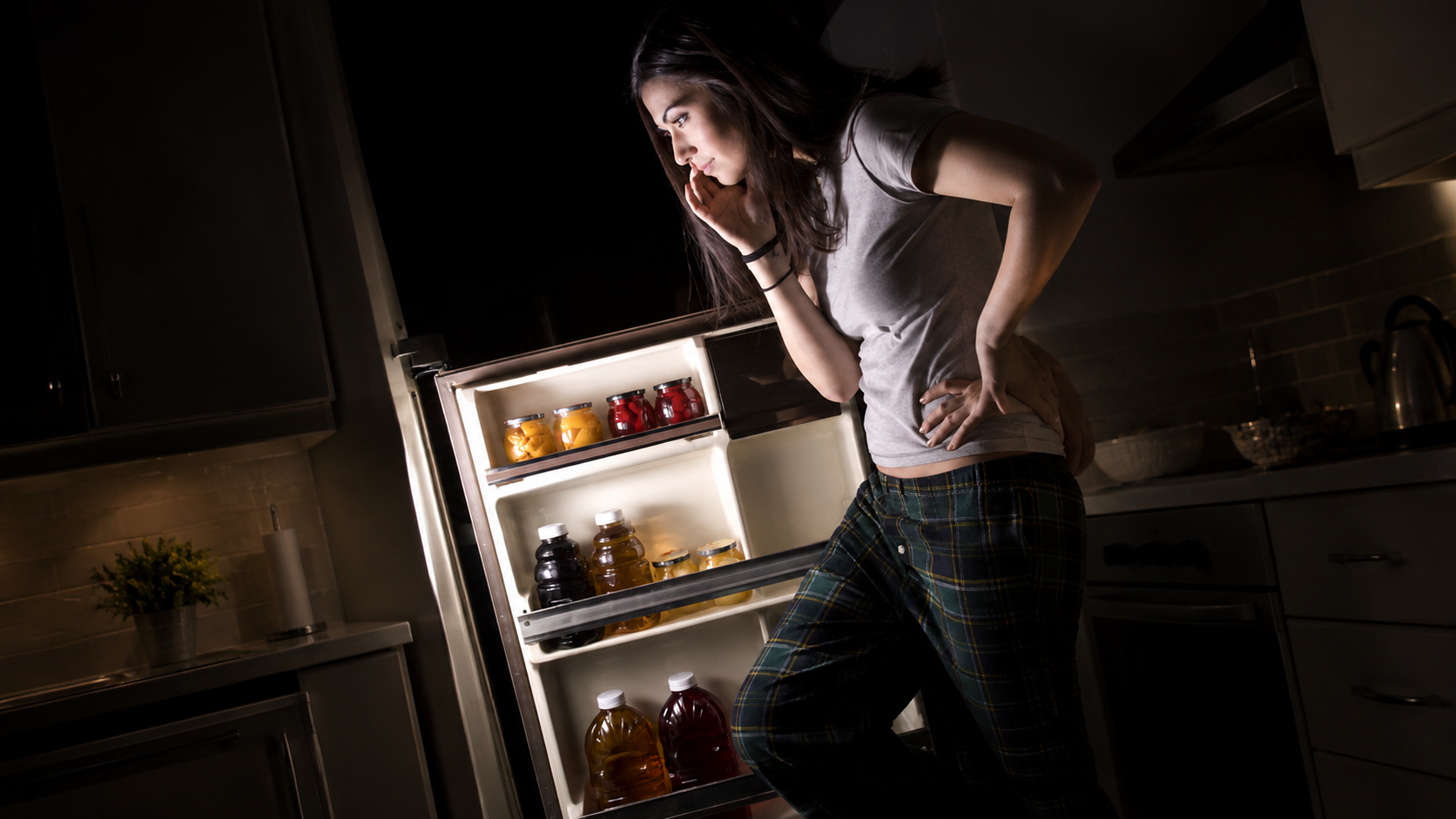
We've all been triggered to eat for the wrong reasons, both by healthy or unhealthy food — it happens. Food only needs to be visible or within arm's length for us to be more likely to eat it.
Many of us wish we had healthier eating habits, though many of us don't realise — often the secret to better eating habits is better triggers.
One of the most important parts of changing a habit is the trigger.
In order to make changes we need to make it easier to do the things we want to do more often, and harder to do the things we want to do less often. Helping yourself remember to do the helpful behaviour is a good first step. Making it easy to repeat can be helped along by an incentive or reward. Give yourself the best chance of success by being prepared with healthy options on hand. Think about the benefits and rewards often, as these are reinforcing.
Habits are great when they serve us. Unfortunately not all of them do serve us, and it can be hard to interrupt a habit. For example, if you have ever been a nail biter, it can be really hard to break the habit of putting your fingers in your mouth… tricks like bitter nail polish can be used as a trigger to interrupt the habit. With the right triggers you can interrupt old habits and set new ones in motion.
So how do we apply this to eating? Here are some ways you can trigger yourself to eat healthier…
1. Choose one habit to get started with
Whether it's doing more of something like eating more veggies, or doing less of something like drinking soft drink. Write your reasons for quitting the habit, remind yourself of the benefit. Have quiet times to strengthen your resolve and plan your reward or incentive. How does the new habit benefit you, and how will you reward yourself? Plan when you're feeling strong. You do not have endless amounts of self control and self discipline, so set yourself up for success.
2. Create an environment that triggers success, not temptation
The less you have to bump into temptation the better. When you do face temptation, accept that you are being tempted but be stubborn and refuse to give in. "I can manage this", "I refuse to give up on myself", "I can handle this", "I can say no to this", "I can live without this," "Isn't this interesting, I can see how easily I would have been tempted by this in the past, yet now I feel ok to walk away today." "If I don't buy it, I can't eat it."
3. Buy healthy food
Stock your fridge and cupboards with ingredients and a plan to use them. Stocking the cupboards and fridge with healthy options, and removing or limiting unhealthy options, makes it easier to eat healthy food.
4. Saying no once in the shop beats saying no seven times in your house
Often it's easier to say no once in the shop to something tempting, rather than buying it and then having it in your house tempting you every day until it's finished. Once it's in your house, you're much more likely to eat it — it's much harder to refuse because you will justify it's wasteful not to eat it.
5. Trigger yourself into success
By now you will know that putting all your energy into focusing on trying to remember "not to do something" or telling yourself to have more "self control" is probably not the most effective strategy. It isn't that sustainable and it is easy to get into a "deprivation energy".
Instead, basically trigger yourself into success (aka a healthy lifestyle). Map out a list of your favourite healthy foods to eat and stick it on the inside of your pantry, kitchen cupboard door or on the fridge. This way you will see the list, not have to think of ideas on the spot, and you will also be reminded of what you want to be eating. Also create a "Quickies" list of quick and easy to prepare healthy favourite meals and ideas handy in the kitchen, to refer to for inspiration when you are hungry, or in a hurry, or both. My daughter calls our house "an ingredients house", which means if you open the fridge or cupboard there isn't a lot of processed snack food. There is always food though, so often I leave out a list or notice of what's for dinner the next three nights, or snack options if anyone gets peckish. E.g. apples and nuts, hummus and crackers, cucumber and tzatziki, chocolate coated almonds, rice crackers and cheese. We also have a dinner rhyme that helps us plan dinner for the week.
6. Make your favourite healthy foods highly visible
Leave a bowl of fresh fruit on the kitchen bench. Make sure there are always at least two types of fruit in the bowl, e.g. apples, mandarins, kiwis and bananas. Arrange your fridge so healthy foods and snacks are at eye level. Your fridge can be easily visually organised so that when you open it you can find what you mean to find rather than just what you "stumble upon". Make sure your fridge is well and logically stocked so you don't feel like there's "nothing to eat". There are always yoghurt, berries, and dips at eye level in the fridge.
7. Plan ahead
I like to plan three days ahead. Planning for the full week feels like an effort, but planning for three days chunks it down and makes it manageable. You can keep a two or three-day meal planner on the fridge. Twice a week, write out what you plan to eat over the following two to three days. That way you are not having to think about it in the evening when you get home from work tired and you (or worse — the kids) are hungry. Research shows that this reduces something called "decision fatigue" which means you are more likely to eat healthily.
8. Use enticing language to describe your menu
Watch this:
Fish, Rice & Veg/salad
or
Salmon Poke Bowl
9. Set the table
Keep your table (or at least most of it) clear of clutter, ready and waiting in anticipation of the meal you will serve on it. Put out place mats if that helps reduce clutter.
10. Serve dinner on individual plates in the kitchen
Rather than having serving dishes on the table (with the exception of salad), because if there is food left in the serving bowls it tempts people to go for seconds.
11. Sit at the table to eat
Whether alone or with friends and family. Eating at the table has been found to have a host of developmental and health benefits for children and the whole family. Try and create some ambience — music playing, candles burning — rather than TV or lap dinners, or everyone retreating to their room to eat.
If you'd like help working out your own energy and protein requirements, or making sense of what you're currently eating, book a consultation.
About Lisa Cutforth
Lisa Cutforth is a degree-qualified clinical nutritionist and integrative health practitioner, combining her qualifications in nutrition, psychology, neuroscience, and genetics to help optimise health, performance, and lifespan.
Read full bio →